
When your tenancy agreement reaches its end date, you generally have two options:
Renew the lease or move out and return the property to the landlord.
What happens next depends mainly on your tenancy agreement, so check the renewal, notice, handover and deposit clauses well before the expiry date.
Decide Early Whether You Want to Renew
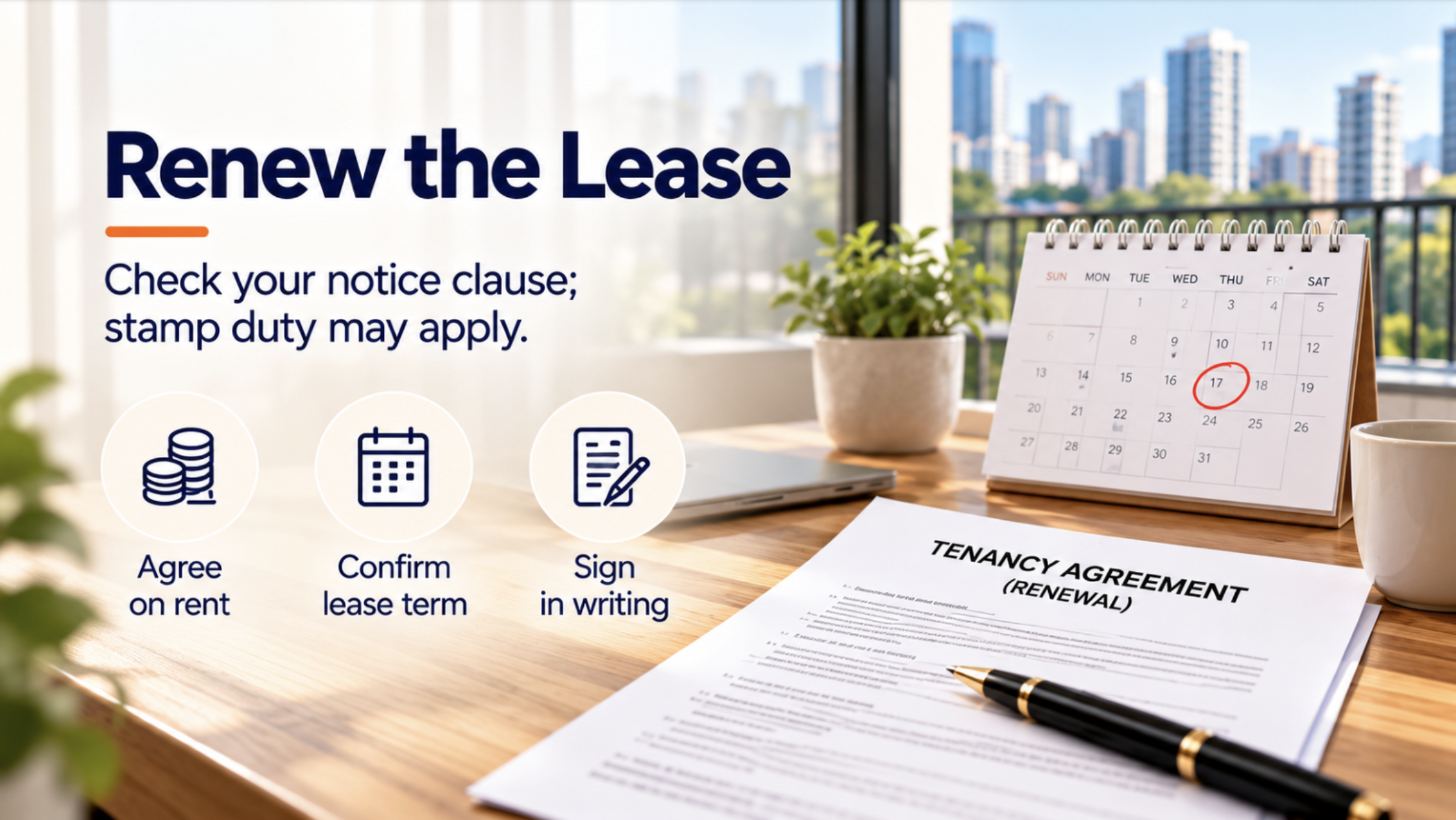
If both landlord and tenant want to continue the tenancy, the new rent, lease period and other terms should be agreed and documented.
CEA’s rental guidance confirms that tenancy terms are negotiable between landlord and tenant.
Your existing agreement may also require advance notice if you intend to renew or leave. There is no universal 30- or 60-day rule — the required notice period depends on what your agreement says.
If the lease is extended or a new tenancy is signed, stamp duty may also apply. IRAS explains the rules for lease extensions here.
Do Not Simply Stay After the Lease Expires
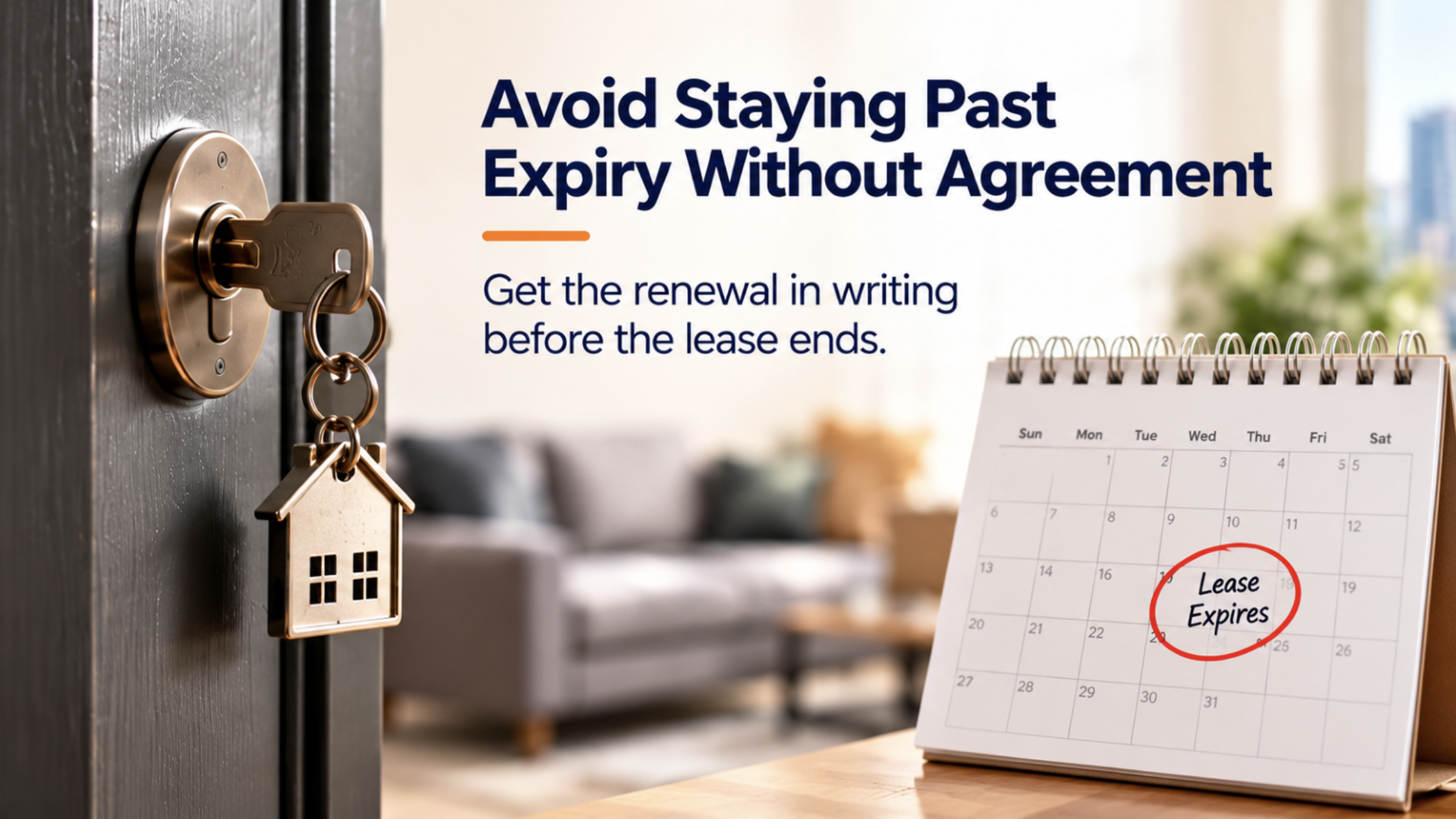
If the tenancy expires and you continue occupying the property without a formal renewal, the legal position can become less clear.
Singapore case law shows that when a tenant remains after expiry and the landlord accepts rent, the parties’ conduct may in some circumstances create a new tenancy, with its terms depending on the previous agreement, negotiations and subsequent conduct. It is not automatically guaranteed to become a month-to-month tenancy.
There can also be serious consequences for holding over without the landlord’s agreement, including potential claims for additional rent depending on the circumstances and agreement.
The safest approach is therefore simple:
Agree and sign the renewal before, or by, the expiry date.
What If You Decide to Move Out?
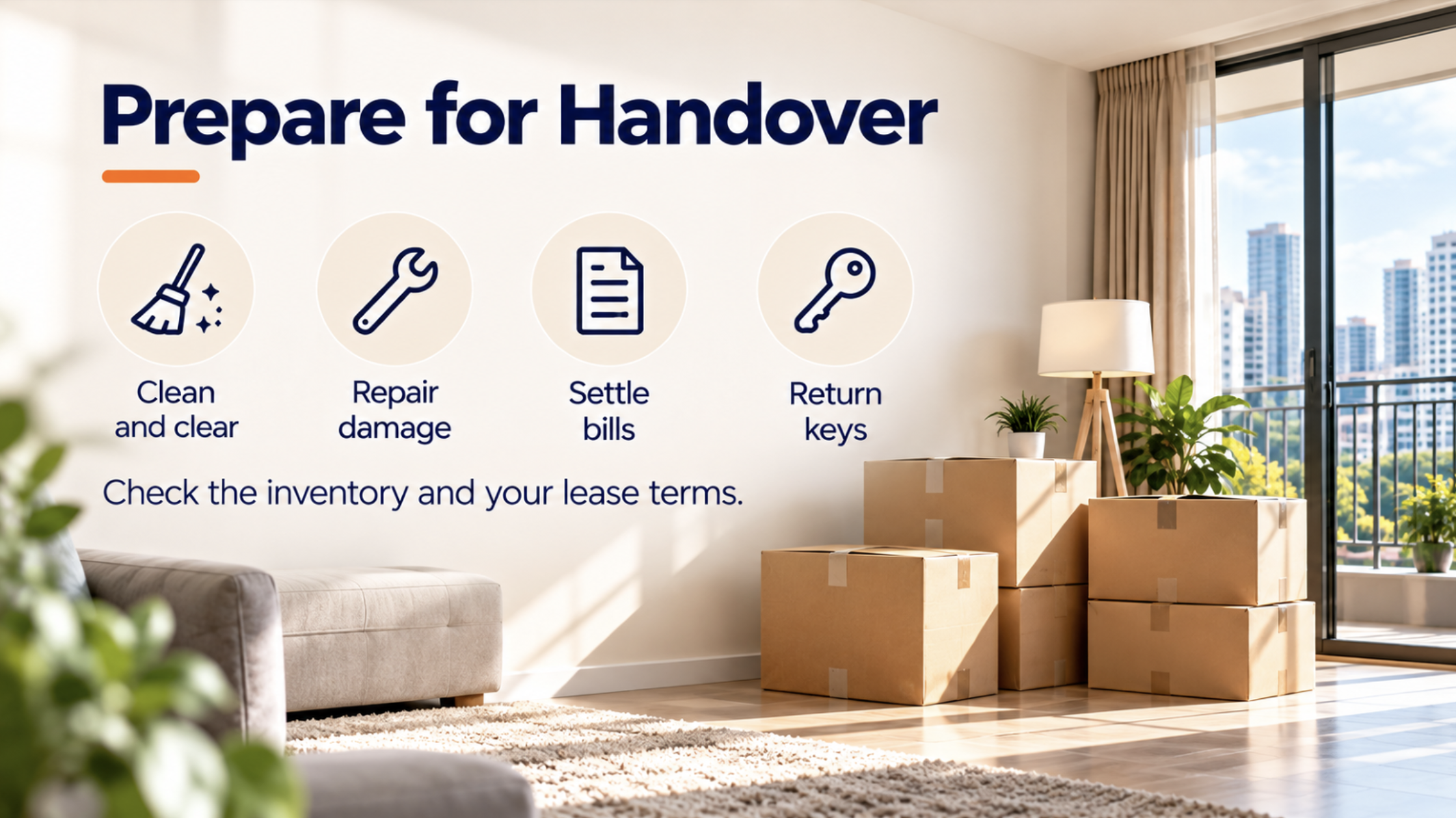
If you are leaving, check the handover requirements in your tenancy agreement.
These may include:
Cleaning the property
Removing personal belongings
Repairing tenant-caused damage
Completing required air-con servicing
Settling rent and utility bills
Returning all keys, access cards and transponders
Use your original inventory list and move-in photos to compare the condition of the property before handing it back.
What Happens to Your Security Deposit?
After handover, the landlord can assess whether any deductions are permitted under the tenancy agreement.
CEA’s recommended private residential tenancy agreement template allows reasonable deductions for breaches of the agreement after the tenant has been given notice and an opportunity to remedy them. The remaining deposit should then be refunded when the tenancy expires or is terminated.
There is no standard legal rule requiring every residential deposit to be returned within 7 or 14 days. Your tenancy agreement may specify its own timeframe, so check this before signing and again before moving out.
Disputes over deposit deductions are generally private contractual matters between landlord and tenant. CEA notes that mediation, the Small Claims Tribunals or other legal avenues may be considered where necessary.
The Bottom Line
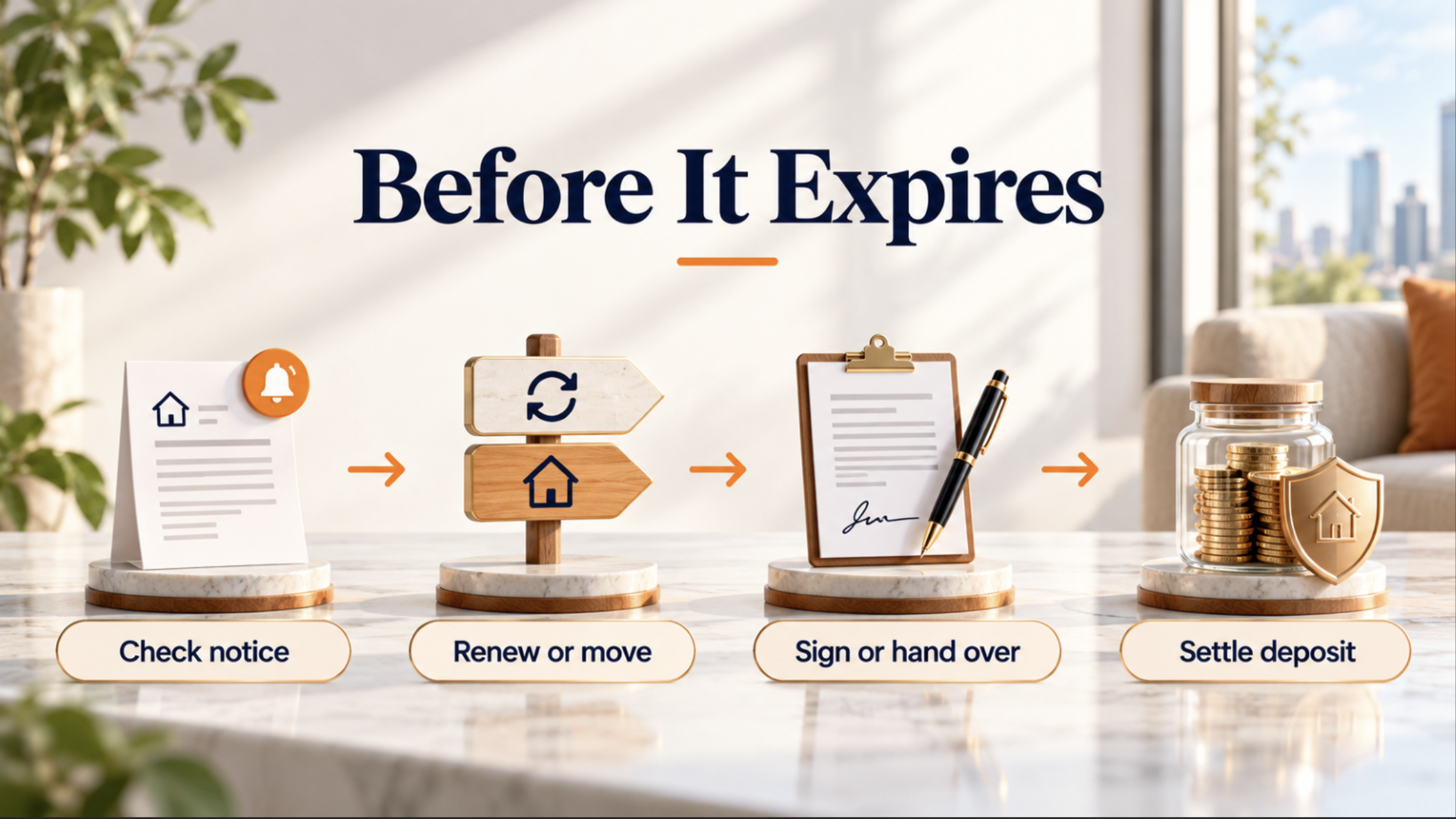
Before your tenancy expires:
Check the notice period → decide whether to renew → document the new terms if staying → prepare for handover if leaving → settle the security deposit
Most importantly, avoid letting the tenancy simply drift beyond its expiry date without a clear written agreement.
Disclaimer: Rental and tenancy information used in this article is accurate as of 29 October 2026 and may change. Tenancy agreements can contain different negotiated terms, so always review your own agreement and refer to the latest CEA rental guidance.
Share this article


