
Before moving into a rental property, tenants are usually asked to pay a security deposit.
The deposit protects the landlord if the tenant does not meet certain obligations under the tenancy agreement. But how much should you actually pay — and when can money be deducted from it?
How Much Security Deposit Is Common?
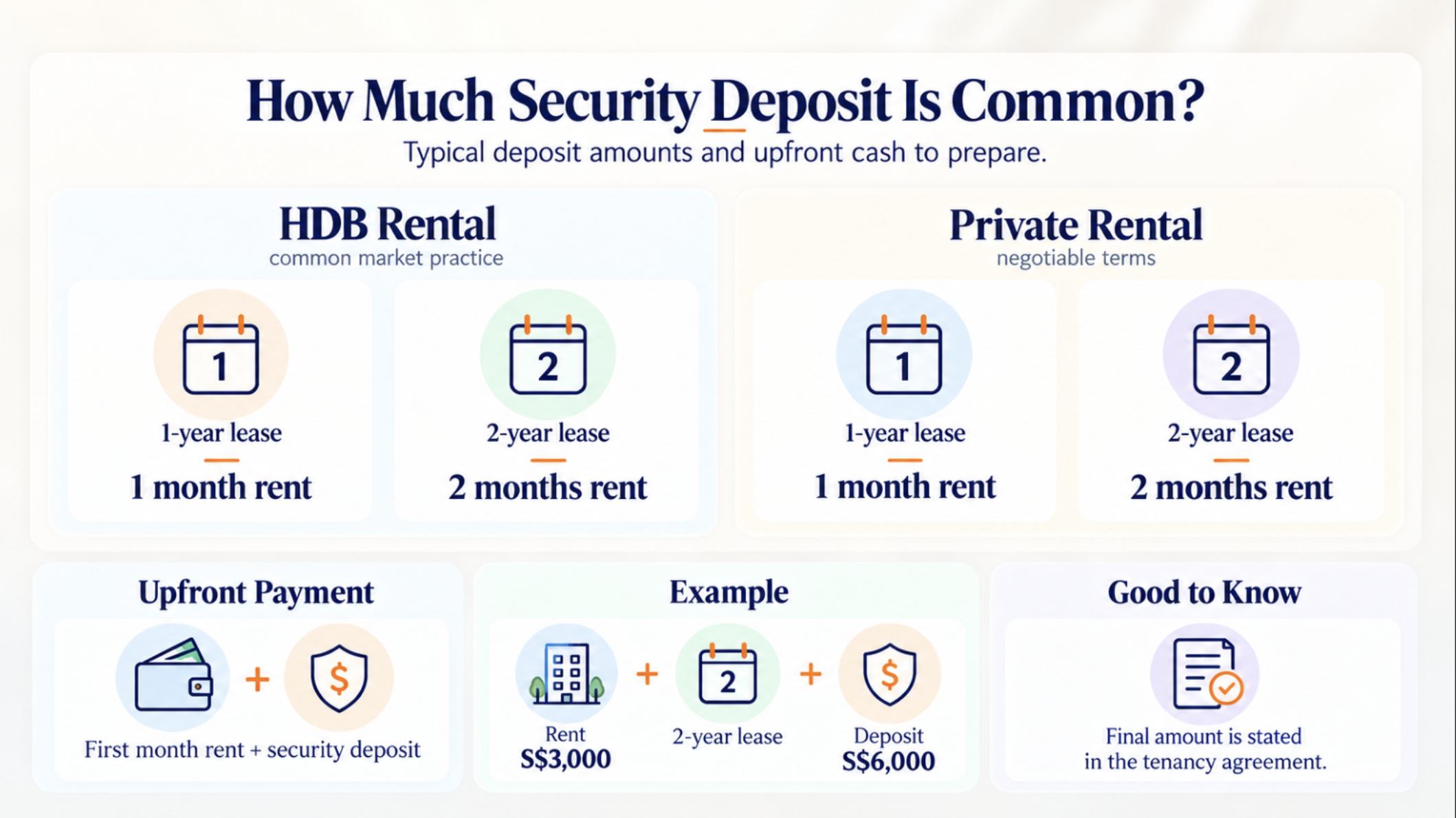
There is no single fixed deposit amount that applies to every residential tenancy. The amount should be agreed between the landlord and tenant and written clearly into the tenancy agreement.
As a common market practice, HDB’s rental guidance states that the deposit is usually equivalent to:
1 month’s rent for a 1-year tenancy
2 months’ rent for a 2-year tenancy
For example, if your rent is S$3,000 per month and you sign a two-year lease, a typical security deposit may be S$6,000.
This is a market convention rather than a universal legal formula, so always check the amount stated in your tenancy agreement. The Council for Estate Agencies (CEA) also notes that tenancy terms can be negotiated between both parties.
What Does the Security Deposit Cover?
The deposit is generally held as security for the tenant fulfilling the terms of the tenancy agreement.
CEA’s recommended private residential tenancy agreement template provides that a landlord may make a reasonable deduction if the tenant breaches the agreement and does not remedy the breach after being notified.
Depending on the agreement, this could include issues such as unpaid rent, tenant-caused damage, missing or broken items, or other obligations that were not fulfilled.
The deposit is not normally meant to cover fair wear and tear from ordinary use.
When Can the Landlord Make Deductions?
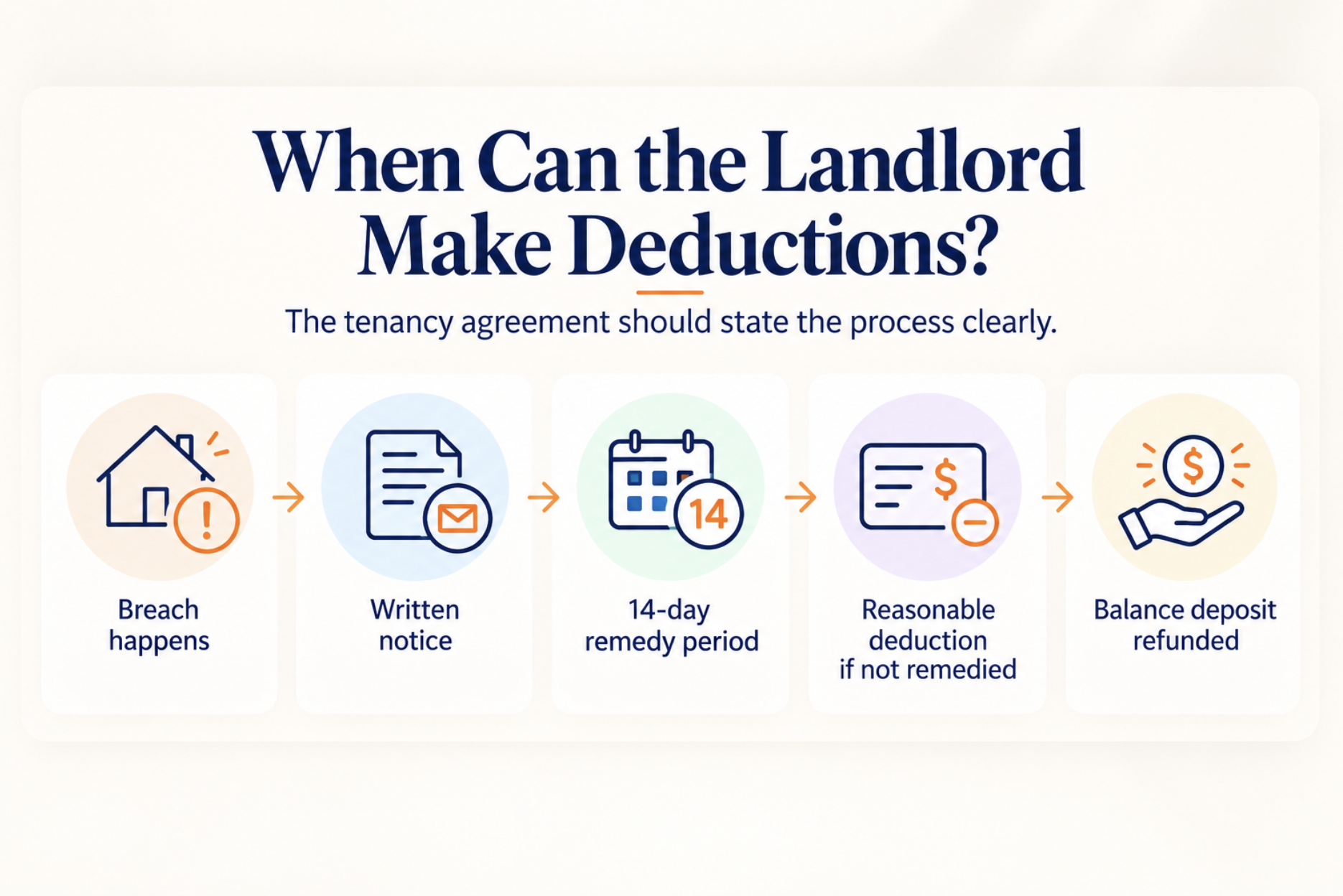
The exact rules should be stated in your tenancy agreement.
Under CEA’s recommended template, the landlord should first give the tenant written notice of the breach and an opportunity to remedy it before making a deduction. The template provides a 14-day period unless both parties agree otherwise. Any remaining deposit is then refundable when the tenancy expires or is terminated.
Because the template is only a guide, your actual tenancy agreement may contain different terms.
This is why tenants should read the security deposit, repairs, inventory and handover clauses carefully before signing.
How to Protect Yourself at Move-In and Move-Out
A simple way to reduce disputes is to document the property's condition.
Take clear photos when you move in, check the inventory list carefully and record existing scratches, stains, damaged furniture or faulty appliances.
CEA also recommends preparing and signing an inventory list where required, particularly when a security deposit is involved.
At the end of the tenancy, compare the property against the same records before handing back the keys.
Compare the Rent Before You Commit
The deposit is usually linked to the monthly rent, so a higher rent also means more cash tied up upfront.
Before committing, renters can compare available properties on the RealAgent Listing Portal to get a better sense of how the asking rent compares with similar homes.
The Bottom Line
A useful benchmark is:
1-year lease → around 1 month’s rent as deposit
2-year lease → around 2 months’ rent as deposit
But the tenancy agreement ultimately determines how much you pay, what the deposit covers and when deductions can be made.
Before transferring the deposit, make sure those terms are clear — and keep records of the property's condition from the day you move in.
Disclaimer: Rental guidance and tenancy information used in this article are accurate as of 26 September 2026 and may change. Tenancy terms can vary between agreements, so always review your contract carefully and refer to the latest CEA rental guidance.
分享这篇文章


